Rural Pest‑Management Case Studies from Central West NSW
Our work across the Central West demonstrates the real‑world impact of strategic pest management. From reducing kangaroo pressure to controlling feral pigs, foxes, wild dogs, rabbits, and hares, our case studies highlight measurable improvements in pasture condition, livestock safety, and long‑term property resilience
Case study 1 - Regional Golf Course Wildlife Management Program
Client
Confidential Regional Golf Course
Location
Riverina Region, NSW
Project Overview
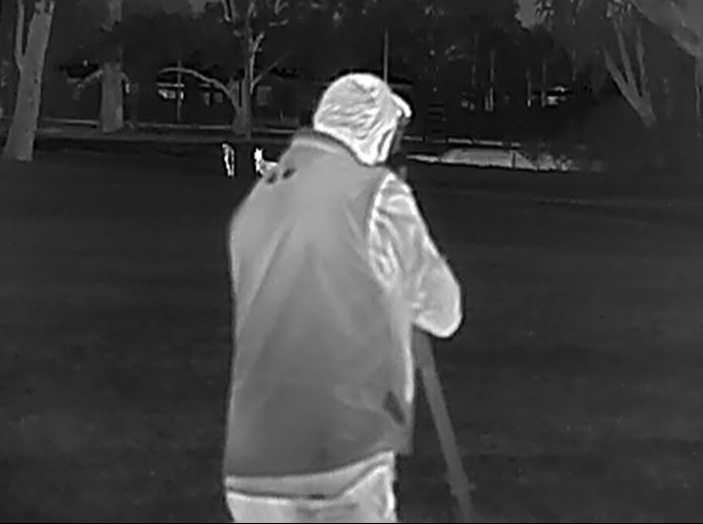
A regional golf course engaged Davrac Rural Pest Services to implement a structured wildlife management program to address increasing kangaroo activity across an active recreational facility. The site required a contractor capable of working safely within a public-access environment while maintaining normal operations and meeting all regulatory requirements.
Challenges
- Active public-access environment
- Ongoing golf course operations
- High stakeholder visibility
- Strict safety and risk management requirements
- Wildlife impacts to turf, infrastructure and course presentation
- Requirement for professional reporting and compliance documentation.
Davrac's Approach
Davrac developed a structured, site-specific management program supported by:
- Detailed operational planning
- Risk assessment and hazard management
- Coordination with client representatives
- Strict work-zone controls and safety procedures
- Compliance with all relevant licensing and regulatory requirements
- Professional operational reporting and record keeping
The program was designed to minimise disruption to course operations while maintaining the highest standards of public safety and operational accountability.
Outcomes
- Wildlife activity significantly reduced across key operational areas
- Improved safety and usability of affected sections of the facility
- Minimal disruption to normal golfing activities
- Compliance requirements successfully maintained throughout the program
- Clear reporting provided to support client governance and record keeping
Why It Matters
This project demonstrates Davrac's ability to operate safely and professionally within complex environments where public access, stakeholder visibility and regulatory compliance are critical considerations. The successful delivery highlights our capability to support not only agricultural clients, but also councils, recreational facilities, public land managers and commercial organisations requiring structured vertebrate pest management solutions.
Services Demonstrated
✅ Wildlife Management Programs
✅ Public Access Environment Operations
✅ Risk-Managed Pest Control
✅ Compliance Documentation
✅ Stakeholder Coordination
✅ Professional Reporting
Case study 1 - Rabbit Control & Pasture Recovery Program
Property Type: Cattle Grazing Enterprise, Central West NSW
Primary Issue: High rabbit populations preventing pasture recovery following prolonged dry conditions.
Program Outcomes
✅ More than 80% reduction in rabbit activity within six months
✅ Significant reduction in active burrow networks across affected paddocks
✅ Improved pasture establishment and ground cover
✅ Reduced grazing pressure on recovering pasture
✅ Productive grazing capacity restored across previously impacted areas
The Challenge
Following several years of drought and below-average seasonal conditions, a cattle grazing property was beginning to recover with improved rainfall and pasture growth.
However, high rabbit numbers were preventing that recovery from taking hold.
Actively breeding rabbit populations had established extensive burrow systems throughout the property, with grazing pressure concentrated on emerging pasture and desirable ground cover species. New growth was often removed before it could establish, limiting the property's ability to rebuild feed reserves and return paddocks to full productivity.
The landholder identified several ongoing concerns:
- Heavy grazing pressure on emerging pasture
- Expanding burrow systems across grazing areas
- Soil disturbance and erosion around active warrens
- Reduced pasture utilisation by livestock
- Slower recovery following seasonal improvement
Without intervention, rabbit numbers were likely to continue increasing as seasonal conditions improved.
Our Approach
Davrac Rural Pest Services developed a staged rabbit management program focused on both immediate population reduction and long-term suppression.
The program included:
- Property-wide assessment and mapping of active rabbit populations
- Identification of major burrow networks and breeding locations
- Targeted night-time thermal operations in high-activity areas
- Systematic destruction of active warrens and harbour sites
- Ongoing monitoring to identify re-emerging activity
- Recommendations to support pasture recovery and minimise reinfestation risk
The objective was not simply to reduce rabbit numbers temporarily, but to address the underlying breeding and harbouring areas contributing to ongoing population growth.
Results After Six Months
Monitoring conducted throughout the program demonstrated a substantial decline in rabbit activity across targeted areas.
Rabbit numbers reduced by more than 80% in mapped control zones, with a significant decline in active burrows, fresh diggings and grazing damage.
As rabbit pressure reduced, pasture establishment improved noticeably across affected paddocks. Ground cover increased, soil disturbance reduced and previously suppressed areas began returning to productive use.
The reduction in competition for available feed also improved overall grazing efficiency, allowing livestock to make better use of recovering pasture.
Long-Term Outcome
By combining population reduction with burrow destruction and ongoing monitoring, the program achieved more than a short-term decrease in rabbit activity.
The property was able to transition from managing pest pressure to rebuilding pasture productivity, improving feed availability and restoring carrying capacity across affected paddocks.
The landholder now undertakes seasonal monitoring and maintenance control activities to ensure rabbit numbers remain low and pasture recovery continues.
Client Feedback
"The difference wasn't just fewer rabbits. For the first time in years, the pasture actually had a chance to establish properly. We could see the improvement in ground cover and grazing capacity within months. Davrac helped us get ahead of the problem rather than constantly chasing it."
case study 2 - Coordinated Predator Management Program
Wellington District, NSW
Property Type: 4,500-Acre Sheep Enterprise
Challenge
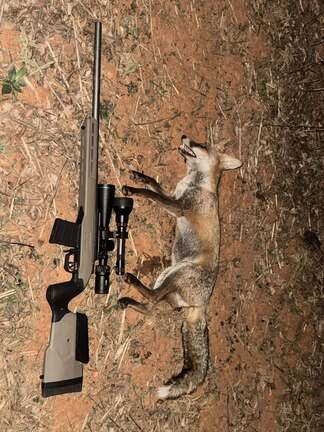
The property had experienced increasing lamb losses over several seasons due to fox and wild dog activity during lambing. While periodic control measures had been undertaken previously, efforts were generally reactive and confined to individual properties.
Predators continued to move between neighbouring holdings, resulting in ongoing pressure and inconsistent results.
Our Approach
Davrac Rural Pest Services developed a coordinated management program involving:
- Pre-program monitoring to identify predator travel corridors
- Thermal-assisted night operations targeting peak activity periods
- Collaboration with neighbouring landholders
- Strategic timing to coincide with lambing
- GPS-recorded activity monitoring and reporting
All works were completed in accordance with NSW legislative requirements and recognised animal welfare standards.
Program Outcomes
Within six weeks of implementation:
✅ Predator detections reduced by approximately 60-70%
✅ Lamb survival improved by an estimated 25-35%
✅ Activity along key creek and boundary corridors significantly reduced
✅ Previously under-utilised paddocks were returned to normal grazing operations
✅ Participating landholders reported increased confidence entering lambing season
Long-Term Result
More importantly than the initial reduction, the program demonstrated the value of coordinated, landscape-scale management.
By addressing predator movement across property boundaries rather than treating individual paddocks in isolation, participating landholders achieved more consistent and sustainable outcomes.
The group has since continued seasonal control activities as part of a broader predator management strategy.
Client Feedback
"The biggest difference wasn't just the reduction in predator activity. It was having a structured plan and knowing neighbouring properties were working towards the same outcome. The improvement in lambing results was noticeable almost immediately."
Case Study 3 — Large‑Scale Feral Pig Pressure on a Nyngan Grazing Property
Property Type: Broadacre Cropping & Grazing
Location: Western NSW
Primary Issue: Escalating feral pig numbers causing damage to water infrastructure, grazing country, and livestock production.
Program Outcomes
✅ Approximately 65-75% reduction in feral pig activity within eight weeks
✅ Significant reduction in rooting and damage around dams, creek lines and water points
✅ Improved pasture recovery and establishment across affected paddocks
✅ Reduced livestock risk during lambing and calving periods
✅ Ongoing monitoring framework established to maintain long-term control
The Challenge
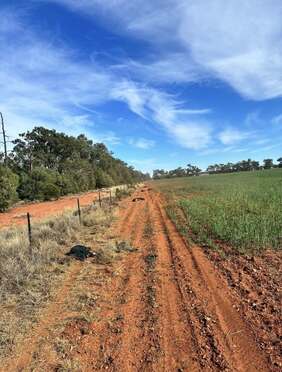
Following several favourable seasons, a 2,000-acre mixed farming enterprise west of Nyngan experienced a rapid increase in feral pig activity across the property.
Large mobs were regularly accessing dams, watercourses and grazing paddocks, resulting in extensive soil disturbance, pasture damage and infrastructure impacts. The landholder was also concerned about increasing risks to newborn livestock during lambing and calving periods.
Key issues identified included:
- Heavy rooting and wallowing around dams and water points
- Damage to regenerating pasture and newly established grazing areas
- Predation risk to vulnerable lambs and calves
- Soil disturbance contributing to erosion and reduced pasture productivity
- Increasing pig populations despite previous ad-hoc control efforts
While control activities had been undertaken in the past, they were generally reactive and isolated, allowing populations to quickly recover and re-establish.
Our Approach
Davrac Rural Pest Services developed and implemented a structured property-wide management program designed to achieve sustained population reduction rather than short-term results.
The program included:
- Comprehensive property assessment and activity mapping
- Identification of high-pressure areas, travel corridors and breeding locations
- Monitoring to establish population trends and activity patterns
- Targeted thermal-assisted night operations in priority zones
- Strategic timing to disrupt breeding cycles and reduce recruitment
- Follow-up surveillance and reporting to measure effectiveness
By focusing effort where activity was highest and maintaining pressure over time, the program addressed both existing pig numbers and the factors contributing to reinfestation.
Results After Eight Weeks
Monitoring conducted throughout the program demonstrated a substantial reduction in feral pig activity across the property.
Regular damage at dams and creek systems declined significantly, while rooting pressure across key grazing paddocks reduced noticeably. Areas previously impacted by frequent disturbance began showing improved pasture recovery, supporting better utilisation by livestock.
Importantly, the reduction in pig activity occurred across multiple management zones, indicating a genuine decrease in overall population pressure rather than simply moving animals from one area to another.
Long-Term Outcome
The program provided the landholder with immediate relief from active feral pig damage while establishing a foundation for ongoing management.
By combining strategic monitoring, targeted control and seasonal follow-up activities, the property transitioned from reactive pest control to a proactive management approach aimed at maintaining low pig numbers year-round.
The landholder has since continued with a seasonal monitoring and intervention program to protect infrastructure, maximise pasture productivity and reduce future pest-related losses.
Client Feedback
“For years we were treating the symptoms rather than the problem. Davrac gave us a structured plan backed by monitoring and reporting. The reduction in pig activity was clear, but the biggest difference was seeing our water points and paddocks start to recover.”
Case Study 4 — Predator Management Success Story | Mixed Grazing Enterprise Near Trangie
Property Type: Mixed grazing enterprise, Trangie District, NSW
Primary Issue: Ongoing predator pressure resulting in stock losses and reduced paddock utilisation.
Program Outcomes
✅ Approximately 60-70% reduction in predator detections within six weeks
✅ Reduced stock losses during the active control period
✅ Significant disruption of predator movement along creek lines and boundary corridors
✅ Improved livestock confidence and utilisation of previously affected paddocks
✅ Ongoing monitoring framework established to support long-term predator management
The Challenge
A mixed grazing operation near Trangie was experiencing persistent pressure from both wild dogs and foxes across several paddocks.
Predator activity was most commonly recorded along creek systems, timbered areas and external boundaries, creating ongoing concerns for livestock production. Despite previous control efforts, predator numbers remained a recurring issue, with activity regularly reappearing after isolated control measures were undertaken.
The property owner reported:
- Ongoing stock losses attributed to predator activity
- Increased predator sightings around lambing areas
- Livestock avoiding certain paddocks during periods of heightened activity
- Continued movement of predators across neighbouring properties
- Limited long-term success from reactive control efforts
While previous programs had achieved short-term reductions, a lack of coordinated management across the wider area allowed predators to quickly re-establish.
Our Approach
Davrac Rural Pest Services implemented a structured predator management program designed to reduce activity across the broader landscape rather than focusing solely on individual paddocks.
The program included:
- Pre-operational monitoring to identify travel routes, activity hotspots and movement corridors
- Targeted thermal-assisted night operations during peak activity periods
- Strategic focus on creek systems, boundary areas and known transit routes
- Coordination with neighbouring landholders to minimise reinfestation risk
- Ongoing monitoring and reporting to measure results and guide future management
All activities were undertaken in accordance with NSW legislation, industry best practice and recognised animal welfare standards.
Results After Six Weeks
Monitoring undertaken throughout the program identified a substantial reduction in predator activity across the property.
Predator detections declined by approximately 60-70% within monitored areas, with the most significant improvement occurring along primary movement corridors and boundary zones.
The landholder also reported a reduction in livestock losses during the program period and improved confidence using paddocks that had previously experienced regular predator activity.
Importantly, the reduction was observed across multiple monitoring locations, indicating a genuine decrease in predator pressure rather than simply shifting activity elsewhere on the property.
Long-Term Outcome
By targeting movement patterns and addressing predator pressure at a landscape level, the program delivered more consistent and sustainable results than previous reactive control measures.
The success of the initial program has led to the implementation of ongoing seasonal monitoring and control activities aimed at maintaining low predator numbers and reducing future impacts on livestock production.
Rather than continually responding to losses after they occur, the property now operates under a proactive predator management strategy focused on prevention, early detection and long-term control.
Client Feedback
"We'd spent years chasing the problem one paddock at a time. Davrac helped us understand where the pressure was coming from and put a structured plan in place to address it. The reduction in predator activity was obvious, and it gave us far more confidence heading into lambing."